

In 2025, artificial intelligence has become a powerful part of every student’s daily routine—from writing help to research summaries and even personalized study plans. However, as AI tools evolve, so does the need for ethical AI use for students. While AI can dramatically improve learning speed and academic performance, using it responsibly is essential to avoid plagiarism, dependency, misinformation, and academic misconduct.
This guide explains exactly how students can use AI ethically, get the maximum benefit from modern tools, and still maintain academic integrity. Let’s explore how AI can be a helpful partner—but not a shortcut that replaces real learning.
1.Why Ethical AI Use Matters More Than Ever in 2025
1. Schools Now Have Advanced AI-Detection Systems
Most universities in 2025 use multi-layered AI detectors that analyze writing patterns, structure, citations, and even typing rhythm. Therefore, copying AI-generated content directly not only risks penalties but also prevents real learning.
2. AI Tools Are Now Integrated into Classrooms
Teachers encourage AI—but expect transparency. Using AI without acknowledgment may still count as unethical behavior.
3. Future Employers Want AI-Aware, Not AI-Dependent Candidates
Companies prefer candidates who can control AI tools, not ones who rely on them blindly.

How Students Can Use AI Ethically in 2025 (Without Cheating)
1. Use AI for Understanding, Not Submitting Answers
AI is excellent for explaining difficult concepts, summarizing dense chapters, or breaking down formulas.
Ethical AI use for students means using the output to learn—not to copy.
Ethical Uses:
- Ask an AI to simplify a textbook chapter
- Request examples to understand a theory better
- Get step-by-step explanations for equations
Unethical Uses:
- Copying homework answers
- Submitting AI-written essays
- Asking AI to solve full assignments and presenting them as your own
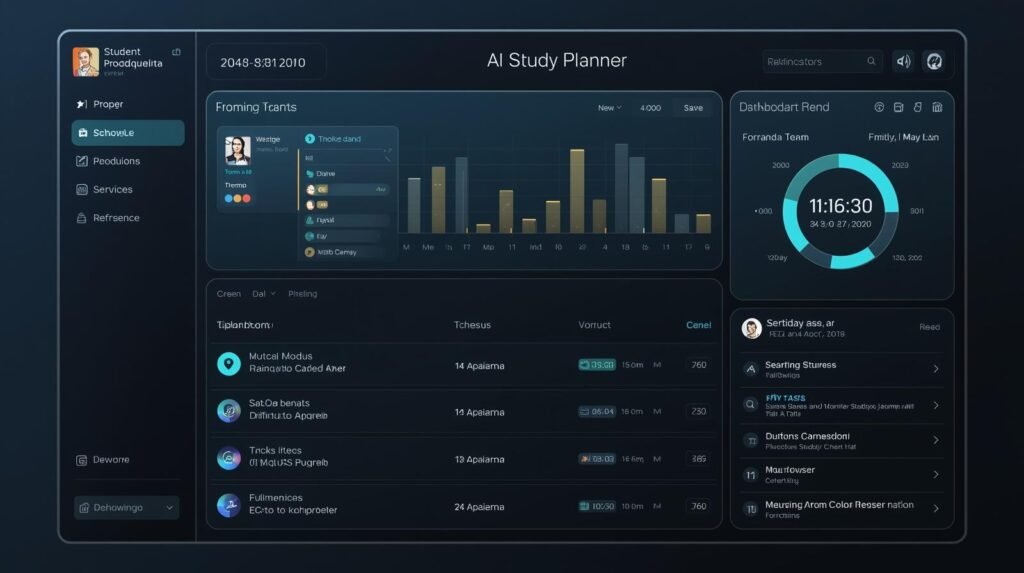
2. Use AI as a Study Planner
Instead of planning your study schedule manually, let AI create a customized plan based on:
- Deadlines
- Exam dates
- Chapter difficulty
- Your study habits
This helps you improve productivity without cheating.
3. Use AI for Brainstorming, Not Complete Writing
AI can help generate:
- Research ideas
- Thesis statements
- Essay outlines
- Arguments and counterarguments
But students must write the final version in their own words.
Tip:
After brainstorming with AI, close the AI tab and write independently. This ensures originality.
4. Use AI for Grammar and Proofreading Only
In 2025, many grammar tools use AI for:
- Correcting sentence flow
- Checking tone
- Removing contradictions
- Improving clarity
Using AI for editing is ethical because you write the content.
5. Cite AI When Required
Many institutions require something like:
“Assistance received from ChatGPT on concept clarification and outline suggestions.”
This transparency helps avoid suspicion.
6. Use AI to Verify Sources, Not Replace Them
AI sometimes generates incorrect facts (AI hallucinations).
Students should:
- Double-check with Google Scholar
- Confirm facts using textbooks
- Verify links and citations manually
Ethical AI use means validating information, not trusting blindly.
7. Use AI for Practice, Not Answers
AI-powered quiz generators in 2025 help students:
- Create mock tests
- Make flashcards
- Practice conceptual questions
- Test themselves before exams
This improves learning legitimately.
8. Don’t Use AI During Closed-Book Exams (Unless Allowed)
In 2025, many devices have AI assistants built-in.
Schools now use:
- Camera monitoring
- Lockdown browsers
- Device restrictions
Using AI during exams = academic misconduct.
Ethical AI use means respecting rules even when AI is available.
Top AI Tools Students Can Ethically Use in 2025
1. Notion AI – Best for Study Planning
Helps generate schedules, notes, and revision trackers without writing content for you.
2. Perplexity AI – Best for Research Assistance
Provides sources, search links, and evidence-based answers.
3. Quizlet AI – Best for Active Recall
Creates AI flashcards, quizzes, and practice tests.
4. Grammarly GO – Best for Proofreading
Corrects writing but doesn’t generate full essays.
5. Wolfram Alpha – Best for Math and Science
Explains steps instead of simply giving results.
Examples of Ethical AI Use in Real Student Scenarios
Scenario 1: Essay Assignment
- Ask AI for topic ideas
- Get a structured outline
- Close AI
- Write essay yourself
- Reopen AI only for grammar correction
Result: Fully ethical submission.
Scenario 2: Solving Physics Problems
- Ask AI for concept explanations
- Understand formula derivations
- Solve problems independently
Result: Improved understanding without cheating.
Scenario 3: Preparing for Exams
- Use AI to make summaries
- Practice quizzes generated by AI
- Identify weak topics
Result: Ethical and effective learning.
How to Tell If Your AI Use Is Ethical
I gained new understanding and insights.
The final answer was written by me.
AI only assisted my thinking instead of replacing it.
Whenever necessary, I stayed transparent.
No content was copied; everything was original.
All facts were checked and verified.
Conclusion
In 2025, AI is one of the best tools students can use to boost their learning speed, improve grades, and reduce study stress. However, ethical AI use for students remains essential to maintain integrity, avoid penalties, and develop real knowledge.
When used wisely, AI becomes a supportive partner—not a shortcut. By following the strategies above, students can take full advantage of AI while staying honest, responsible, and future-ready.